
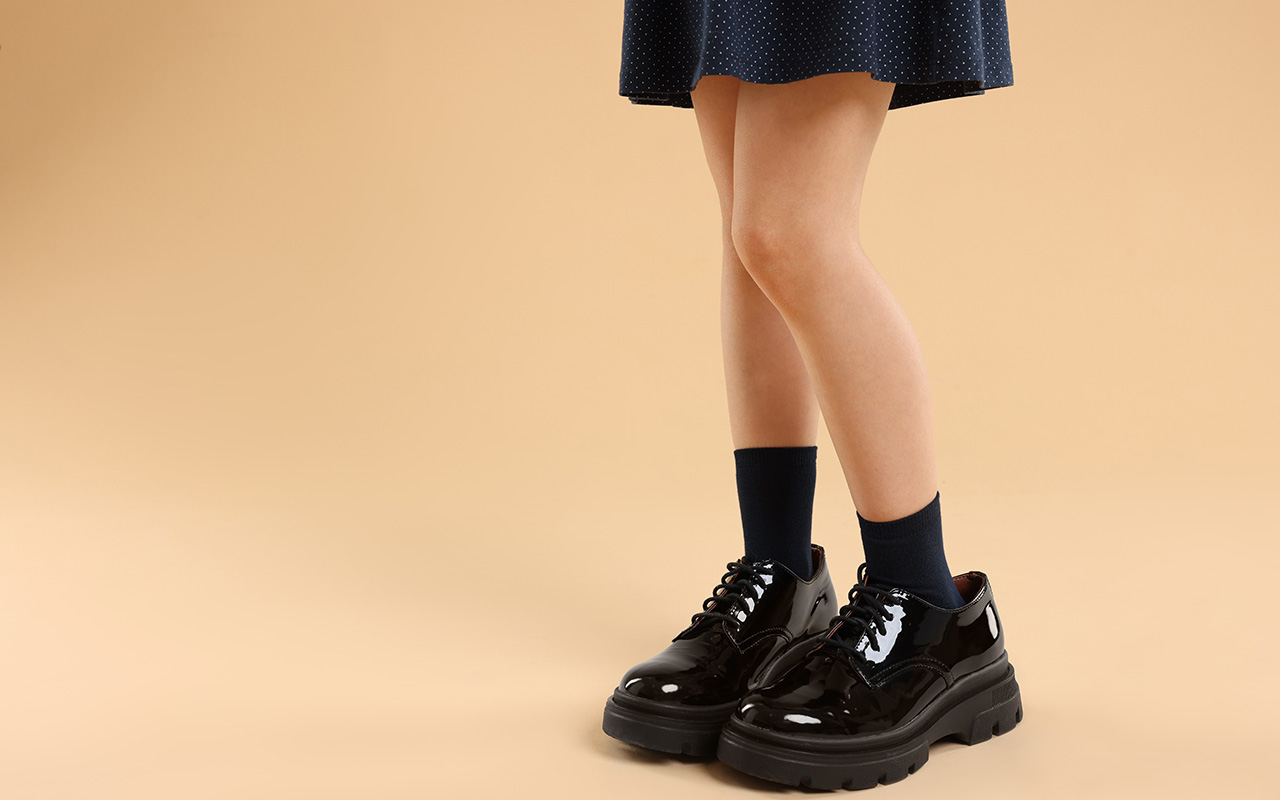
Well-fitting footwear can improve a child’s walking speed, distribute shock when running and encourage a heel to toe pattern of walking and running. These are all positives for encouraging children to comfortably engage in play and sporting activities,
while protecting their foot growth and development.
Most schools require footwear to be worn within the school grounds, and some make it a part of their uniform policy, specifying types, brands, colours or styles. But when it comes to choosing and fitting school shoes for our children, it can sometimes be a source of angst for parents and carers.
Many of us have long-held beliefs that shoes may impact foot growth and development, causing long term problems if they don’t fit well. Given one in four adults have ongoing chronic foot pain, these concerns may be valid.
Let’s talk about footwear fit, why it can be a problem in children and when we need to worry about it most.
Footwear fit is measured as length (from heel to toe), width (across the widest part of the forefoot), and the depth (the internal height from the sole to the top of the toe box). All three need to accommodate the foot.
Many parents and carers would remember applying the ‘rule of thumb’ where a thumb width should be present between the longest toe and the end of the shoe to help judge footwear sizing. This is an effective measure for a good fit, and combined with another thumb test – rubbed across the widest part of the forefoot (over the ball of the foot) to make sure the shoe ‘uppers’ roll slightly – can demonstrate adequate depth and width.
When shoes are too narrow or shallow for the child, toes and joints get squashed, and the pressure across these joints can cause pain and discomfort. Similarly, when a shoe is too short, the foot is restricted, affecting how their feet move.
Shoes one size too small will limit the normal motion of the child’s rearfoot (the bit behind their ankle), meaning it doesn’t absorb as much shock. They also stop the big toe bending enough, meaning children can’t propel themselves forward as easily, stopping them from moving freely.
Such issues can potentially have long-term impact. Studies have shown greater angles of the toe joints in children wearing shoes that are too short which is associated with the development of bunions.
We also see problems when shoes are excessively big. Shoes that are (two sizes or more) too long, wide or deep, can create friction of the skin, bruising under nails and cause children to scrunch their toes to help keep the shoes on. Shoes that are excessively long can also cause children (and adults) to trip.
We have problems if shoes are too big and problems if shoes are too small; so what is ‘just right’. Luckily, children’s feet are more forgiving if shoes are a little big, than a little small, so buying your children’s school shoes one size too big (only) is perfectly acceptable. We also know that sizing up by one size does not change children’s foot function during walking, running or jumping activities, so giving them a little room to grow is perfectly fine.
Unfortunately, due to growth spurts often catching parents and carers unawares, we are more likely to see children in shoes that are too small.
As younger children have softer bones, and foot development and growth are more pronounced prior to six years of age, it is recommended that young children get regularly checked for footwear fit. If you don’t have access to qualified shoe fitters, the ‘rule of thumb’ method can help. Children aged eight years or older are generally more likely to be able to tell you about their shoe fit and how it feels.
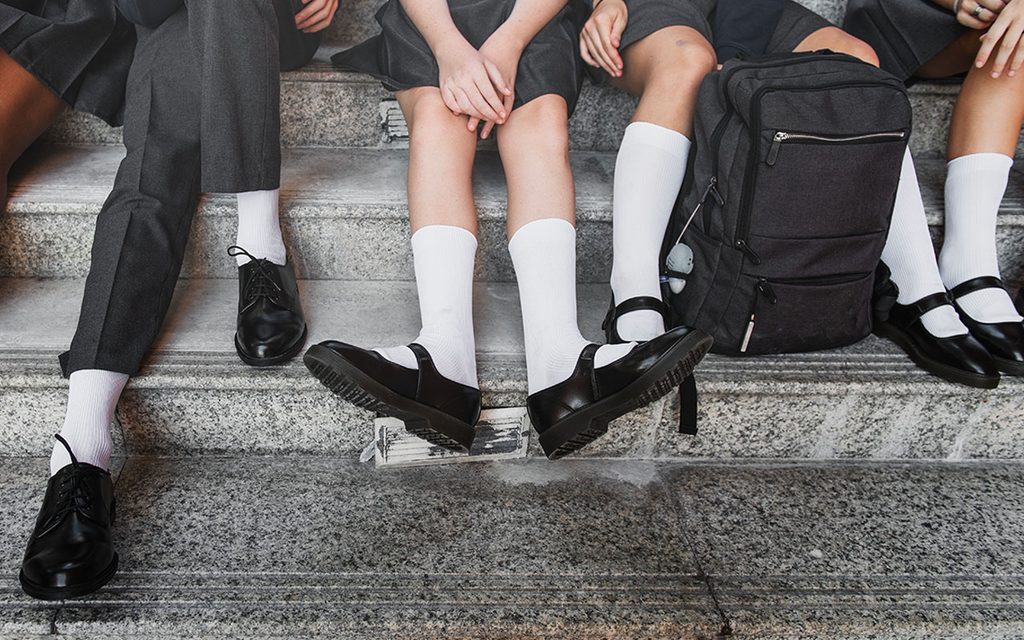
Now that we’ve got fit covered, let’s talk about which school shoe is best. Perhaps not surprisingly, it is the one that fits best. But second to fit, it is the one that will best support the activity they are most likely to do in them.
For some children the ‘best’ shoe might be the one that sits high across the top of their feet to protect them while they scramble and crawl through their school’s playground equipment. But as they get older, this might change to something with sturdy soles if they like to run long distances, or something lighter if they sprint everywhere. Stronger uppers can help toes if they like to kick balls around the school yard, whereas netball and basketball players might prefer something higher cut to support ankles.
When it comes down to it, the best school shoes fit the child or teenager’s feet well, and encourages them to live their best lives.
Of course, when in doubt, seek the help of professional shoe fitters or your local podiatrist. They are always there to help.
Dr Helen Banwell is Program Director for Podiatry with the School of Allied Health at Adelaide University.