
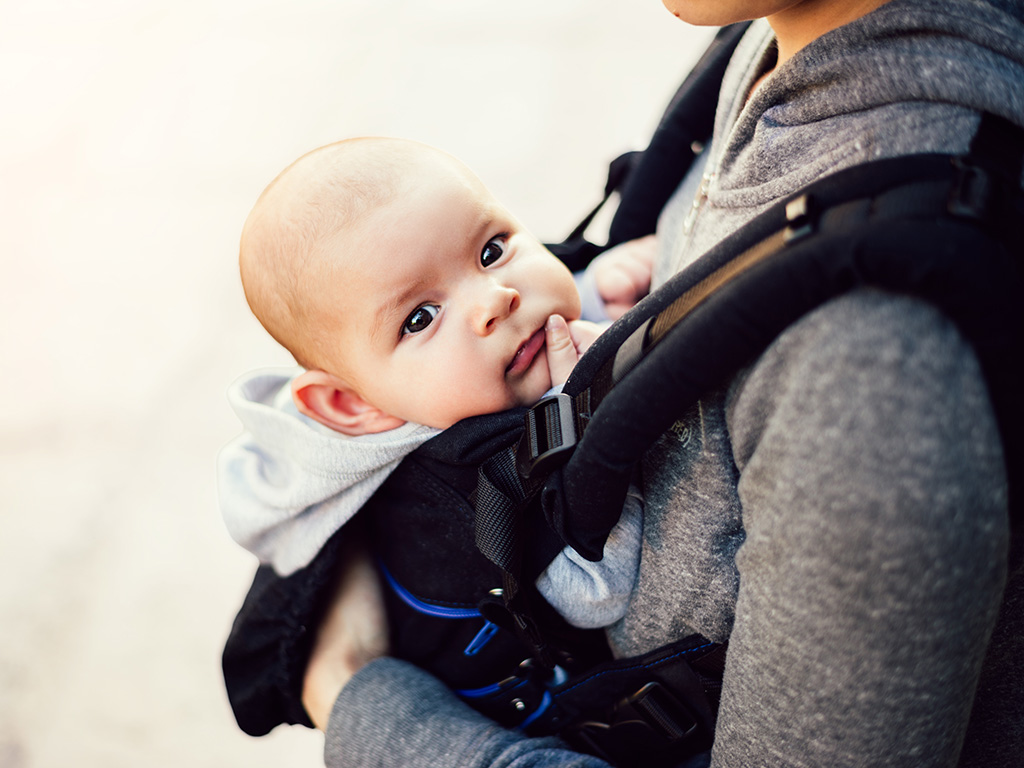
There are too many choices — it’s overwhelming!”
There seem to be new baby carriers entering the market every month. Even those of us experienced in babywearing sometimes struggle to keep up, so it is no surprise that many parents feel unsure where to begin.
In online babywearing spaces it is common to see parents asking for help getting the “right” carrier, while listing several they have already bought and tried. Often, questioning reveals those carriers were well suited to their needs — they simply hadn’t been shown how to fit them comfortably. This is usually why a baby is thought to “not like” a carrier, or why parents experience discomfort in their back, neck, and shoulders.
Choosing and using a baby carrier shouldn’t be complicated. Reaching out online is increasingly replacing face-to-face support, but many parents don’t realise that experienced help is available in person.
Why Support Matters — Especially Early On
Many baby carriers are advertised as “suitable from newborn,” but this doesn’t always reflect how they fit real babies in the early weeks. Newborns vary widely in size, proportion, tone, and readiness. A carrier that works beautifully for one baby may not provide safe or comfortable support for another who is smaller, early-term, or still very curled from birth.
While manufacturers must list a minimum weight, it is only one part of assessing suitability. Height, gestation, muscle tone, and overall physiology all influence whether a carrier provides a secure, airway-safe fit. This is why babywearing educators focus on fit-based readiness, not just weight-based guidelines.
In the first weeks, babies have limited head and neck control, naturally curved spines, small airways, and a strong need for close, contained support. A suitable carrier should hold baby upright, chest-to-chest, face visible, and well supported from spine to pelvis with a clear airway.
Stretchy wraps, woven wraps, ring slings, and hybrid carriers often provide the gentle, mouldable support young babies need. Many soft structured carriers can be used with newborns, but they are not always the best first choice — particularly for babies who are very small or early-term — and often work better once baby has gained tone and fills the panel more naturally. A whole new range of newborn hybrid carriers – a cross between wrap-style and buckle-style are also now available.
Choosing a Safe, Reputable Carrier
Between different styles, safety advice, weight limits, and countless online listings, it is easy to see why some parents choose a carrier based on price or appearance alone.
Unlike car seats, cots, or prams, baby carriers in Australia are not regulated. There is no mandatory safety standard and no requirement that a product meet a benchmark before being sold.
Reputable manufacturers voluntarily test their carriers to recognised international standards and provide transparent information about materials and construction. Strong textiles, reliable stitching at load-bearing points, tested hardware, and clear instructions all contribute to safety.
Very low prices, unclear branding, missing instructions, and unverifiable online sellers are warning signs.
Pre-loved carriers can be an excellent and sustainable option when stitching is intact, hardware is secure, fabric is strong, and authenticity can be confirmed. Quality carriers are built to last and often support multiple families across many years.
Start with Support, Not Just the Carrier
Since the dawn of time, experienced parents have supported those starting out by sharing their knowledge. Traditionally, children grew up surrounded by extended family and community, absorbing the skills of feeding, settling, and carrying long before they became parents themselves.
Today many new mothers are geographically distant from family and find themselves needing to build their own village at the very time they need it most.
Babywearing groups often become a point of connection for like-minded parents — places where practical guidance sits alongside ongoing support in parenting.
Finding Help in Your Community
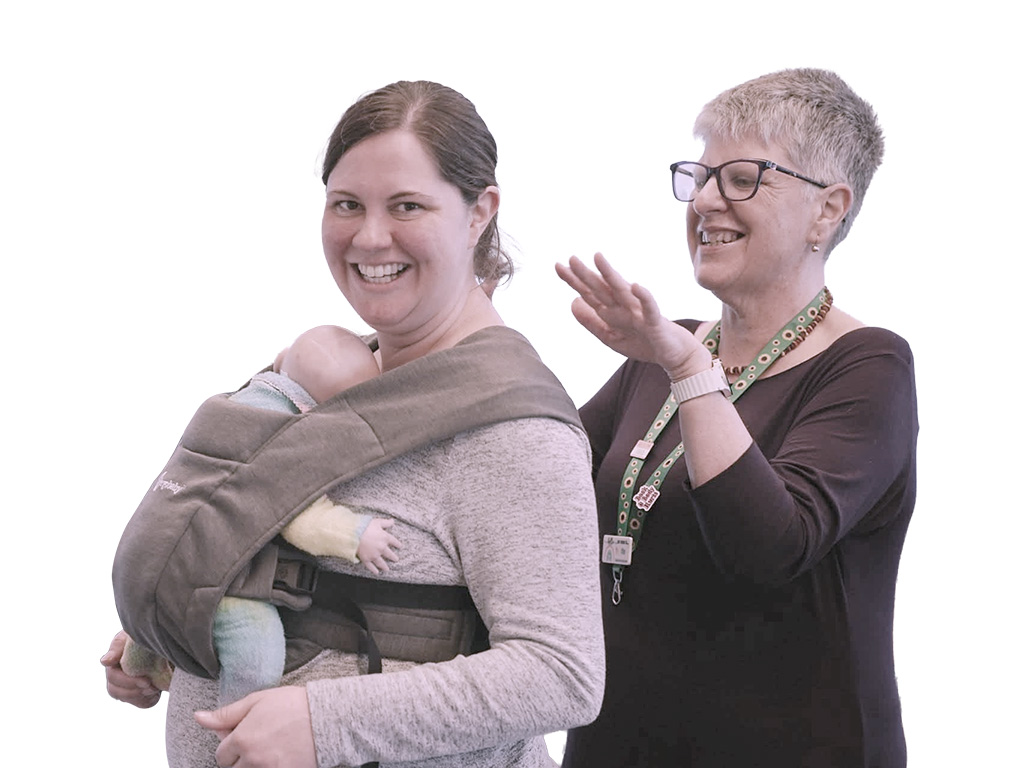
Babywearing educators and consultants can assess fit, demonstrate safe positioning, guide you in using a carrier comfortably, and help troubleshoot common challenges.
Across Melbourne’s south-east suburbs and the Mornington Peninsula,South Eastern Babywearing Group has been supporting families since 2014. A non-commercial collective within the Southern Natural Parenting Network, the group offers unbiased guidance in choosing and using baby carriers from the newborn period through to the toddler years. Babywearing educators facilitate gatherings in your community where you can try a range of carrier types and get help with your own carriers.
Professional babywearing consultants offer a fee-based service, in person or online. They usually have a range of carriers available to try and buy, and can also help with special situations like carrying premature babies, twins or children with additional needs.
We believe safe and comfortable babywearing should be available to all parents. While the internet provides a wealth of information, working out the excellent from the unsafe can be challenging. Seeking qualified guidance — whether through a local group, a certified consultant, or a trusted community — helps families begin their babywearing journey with confidence.
With an extensive collection of tester carriers available at meets, markets, and community events, parents can try different styles, learn correct fitting techniques, and receive support in a relaxed environment. Safety and comfort remain the core purpose.
Yvette O’Dowd is not your typical grandmother! This mother of three and ‘Granny’ of three has been a breastfeeding counsellor since 1992. In 2014, Yvette established the Southern Natural Parenting Network, incorporating South Eastern Babywearing Group. With 11,000 members world-wide, the group supports parents interested in breastfeeding, babywearing, co-sleeping, baby-led weaning and modern cloth nappies and other aspects of gentle, natural parenting.
www.facebook.com/SouthernNaturalParentingNetwork