
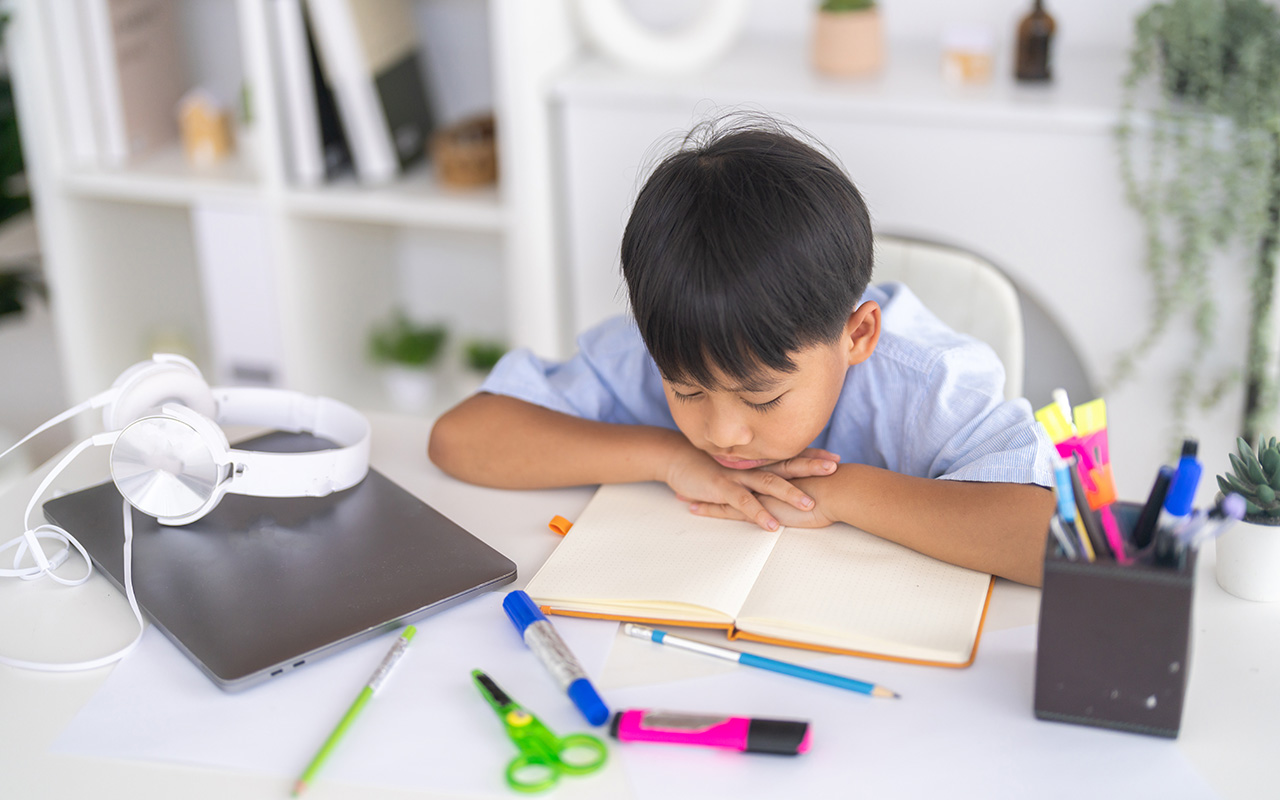
You may notice your child putting pressure on themselves to get things just right, whether at school, in sport, with friends or at home. While wanting to do well is a normal part of growing up, for some children this pressure can start to affect their confidence and wellbeing. Knowing how to respond supportively can make a real difference.
Does your child often get upset when they make small mistakes? Or give up quickly when trying something new? It could be they’re showing signs of perfectionism.
While having high expectations can be beneficial, when children feel they need to be perfect this can lead to mental and physical health problems. Research shows perfectionism can be closely linked to anxiety disorders in children and teenagers. Left unaddressed, childhood anxiety usually continues into adulthood.
The good news is, if you feel your child has some perfectionistic tendencies, there are lots of ways you can help turn things around.
What are the signs of perfectionism in children?
Perfectionism is a trait that can show up at any stage during childhood or adolescence. It can be caused by genetic or environmental factors.
In young children, this might look like scribbling heavily over their drawings or ripping them up. Older children might avoid trying new things because they’re worried they won’t be good at them. Other signs of perfectionism in children and teenagers can include:
• Having unrealistic or extremely high expectations of themselves (such as in school, sports, music, dance or over their bodies)
• Becoming anxious or upset over small mistakes
• Self-criticism and negative self-talk (“I’m hopeless, I can’t do anything right, I’m not good/pretty/smart enough, I’m a failure”)
• Giving up quickly or reluctant to try new things
• Seeking validation and reassurance
• Friendship problems, including avoiding social situations
How to help children overcome perfectionism
Showing your child that it’s okay to make mistakes and fail sometimes is one of the simplest ways you can help. Whether it’s a toddler spilling their drink, a child pronouncing a word incorrectly or a teenager forgetting to do their homework, how you react and what you say next can make a big difference.
Highly critical or overly strict parenting styles, along with unrealistic expectations, can be linked to perfectionism and anxiety in children. By approaching mistakes – or even poor choices – with empathy and guidance, you’ll be helping your child truly learn from them and grow.
It’s also helpful to share your own mistakes and failures and how you overcame them with your child. This helps normalise them and shows your child you’re not perfect either, which can help take the pressure off them. It also encourages your child to talk to you when things go wrong rather than staying silent because they’re afraid you might disapprove.
Remember, you are your child’s most important role model. If you’re a bit perfectionistic too, being kind to yourself when you make mistakes sends an important message.
Another way to help your child overcome perfectionism is to praise them for effort instead of results. If parents and carers focus on results, children can sometimes feel like they’re not good enough, even when they’re trying their best. Celebrating their efforts, on the other hand, helps your child develop a growth mindset, where mistakes and failures are all part of the learning process.
To do this, it can help to identify something specific your child has done well while attempting to do something and praise them for it, no matter how young or old they are:
“I love how you drew a circle for the lion’s face/ rode your bike for three whole seconds/ spent an hour studying for that exam.”
Acknowledging their feelings and frustrations, and following this up with encouragement, can also help:
“It can be frustrating when we can’t do things right away. You can’t do it yet, but you’ll get there.”
“It is hard, but you can do hard things. Do you want a break, or do you want to keep going?”
“Mistakes can make you feel bad, but they also help us learn and grow. They’re good for us.”
The benefits of high (but realistic) expectations vs perfectionism for children
Expecting little or nothing at all from children is not the answer to perfectionism. It’s all about finding the right balance between not expecting too little or too much. Combined with a warm and supportive parenting style, this can build your child’s confidence and help them reach their goals without sacrificing their wellbeing.
Having high but realistic expectations of your child shows them you believe in them. It also encourages them to try new things and teaches them the value of hard work. All of these go a long way in supporting children and teenagers to find fulfilment later in life.
Remember, extremely high expectations can come from anywhere, be it home, school, sporting clubs, dance academies or elsewhere. The sooner you can identify where your child might be feeling overly pressured, the sooner you can address the problem.
Above all, having a close and supportive relationship with your child can help them embrace a growth mindset and flourish. Often, this doesn’t require big changes. It can be as simple as letting small mistakes pass, drawing silly pictures together with your young child or telling your teenager about the time you failed an exam at school. By showing them that no one is perfect and accepting your child for who they are rather than who they could be, you open the door to a world full of bright possibilities.
If your child is struggling…
If you feel your child is struggling with perfectionism, anxiety or mental health problems and may need some extra support, get in touch with your doctor or health professional. Help and guidance is available.
Triple P’s free online support helps families across Australia to raise resilient, happy children. For more evidence-based screen time strategies, check it out on the www.triplep-parenting.net.au
This article was written by Triple P and first published on the Triple P – Positive Parenting Program’s website, reprinted here with permission. Triple P retains copyright © in the article. Refer to the triplep-parenting.net.au for further information about Triple P and the free programs and resources available.
Peninsula Kids Magazine Winter 2026