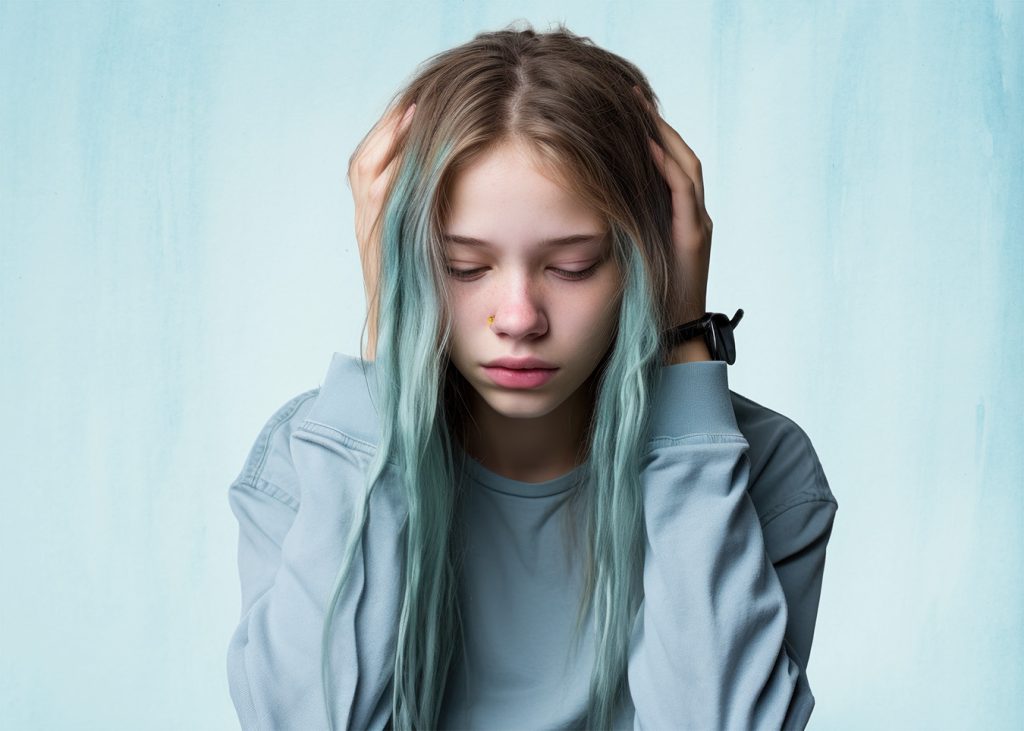
There are moments in parenting that don’t just belong to our children: a slammed door; tears that don’t stop; frustration that comes out sideways, and suddenly, something rises in us – tension, irritation, helplessness, a need for it to stop.
If we’re honest, in those moments, it’s not just about them anymore.
One of the most important things I’ve come to understand as a parent is the difference between what my child needs… and what I need in that moment, because they’re not always the same.
A child might need space.
They might need to sit in their feelings, even if it looks messy or repetitive or bigger than we think it should be.
But in that same moment, we might be feeling something entirely different.
Overwhelmed, uncomfortable, desperate to bring things back to calm and, without even realising it, we can start responding from that.
I remember a moment in our home where one of my children was really struggling with something. It felt big to her. She was emotional, caught in it, trying to make sense of how she felt, and alongside that, there was frustration from my husband. A sense that the reaction was too much for the situation. A need for it to settle, to move on, to not be so intense.
It would have been easy to meet that moment with control, to shut it down, to minimise what she was feeling so we could all feel more comfortable again, but what became really clear was this: that discomfort didn’t belong to her, it belonged to us.
Her experience was hers, but the uneasiness, the urgency, the need for it to stop… that was coming from somewhere else, and what she needed wasn’t for her feelings to be reduced; she needed to be held in them.
Children learn how to move through their emotions by being with someone who can stay steady in them, not someone who needs them to hurry up and be okay.
This shows up in more subtle ways too.
The need to “silver line” things.
To offer solutions quickly.
To restore someone before they’ve even had a chance to feel what’s there.
On the surface, it looks like support, but often, it’s us trying to move the moment along… because sitting in it feels uncomfortable.
Especially if we grew up in environments where big emotions weren’t welcomed; where they were dismissed, rushed, or quietly shut down.
It makes sense that we’d carry that forward.
When we rush someone out of a feeling, they don’t learn how to move through it…they learn how to move away from it.
The challenge isn’t to get it right every time; the challenge is to notice.
To pause, even briefly, and ask: what’s coming up in me right now?
And is this about my child… or is some of this mine?
When we don’t ask that question, we can unknowingly place our discomfort onto them; we can ask them to calm down… not because they’re ready, but because we are.
We can offer solutions… not because they need them, but because we don’t want them to sit in the feeling.
We can minimise… not out of lack of care, but because we don’t know how to be with it.
If we want to raise children who feel safe in their emotion – who don’t grow up believing they have to suppress or justify how they feel – then part of the work is learning to separate what belongs to us from what belongs to them.
Not every time, but more often than we did before.
We all do the best we know how, but when we begin to notice our reactions, our urgency, our discomfort, our need to fix, we create space.
Space to respond instead of react.
Space to let our children feel what’s theirs.
Space to not make their experience about what we need in that moment, and sometimes, that’s the most powerful support we can offer: not fixing, not solving, just staying.
Amanda Stokes is an educator, facilitator, and the founder of The Knowing Self Program that supports emotional awareness, psychological safety, and stronger relationships across school communities. Her work draws from both professional experience and personal lessons learned the hard way.
To learn more, visit www.theknowingself.com.au