
By Dr Tom Porta
If you’ve spent any time around school pick-up zones, birthday parties, or parent group chats, you may have heard a version of this concern: “Why does that child get extra time?” or “Why does that student receive different work from my child? Is that really fair?”
These questions are common and completely understandable. Many parents are drawing on their own schooling experiences, where fairness usually meant everyone doing the same work, in the same way, at the same time. If you worked hard, you succeeded. If you didn’t, you tried harder. It seemed simple, and it was just the reality.
But classrooms have changed. And so has our understanding of what fairness really looks like.
Today, fairness does not mean giving every child the same thing. It means giving each child what they need to learn well. This idea may feel confronting at first because it might sound like some children are getting ‘more’. But in reality, it often means some children are getting what others already have access to automatically.
Think about adults for a moment. If a group of people was asked to read a document, some might need reading glasses. Others might prefer to listen. Some would work quickly, while others would need more time. Providing everyone with the same font size and the same deadline would not be fair, as it would ignore real differences.
Classrooms are no different.
Children arrive at school with different strengths, learning speeds, language backgrounds, emotional needs, and life experiences. Some students have had years of bedtime stories and rich conversations. Others have navigated trauma, illness, disability, or disrupted schooling. Some children can sit still and concentrate easily. Others are working twice as hard just to manage attention, anxiety, or sensory overload.
Treating all of these students identically does not level the playing field. In many cases, it makes learning harder for those who already face barriers.
This is where inclusive and equitable teaching comes in.
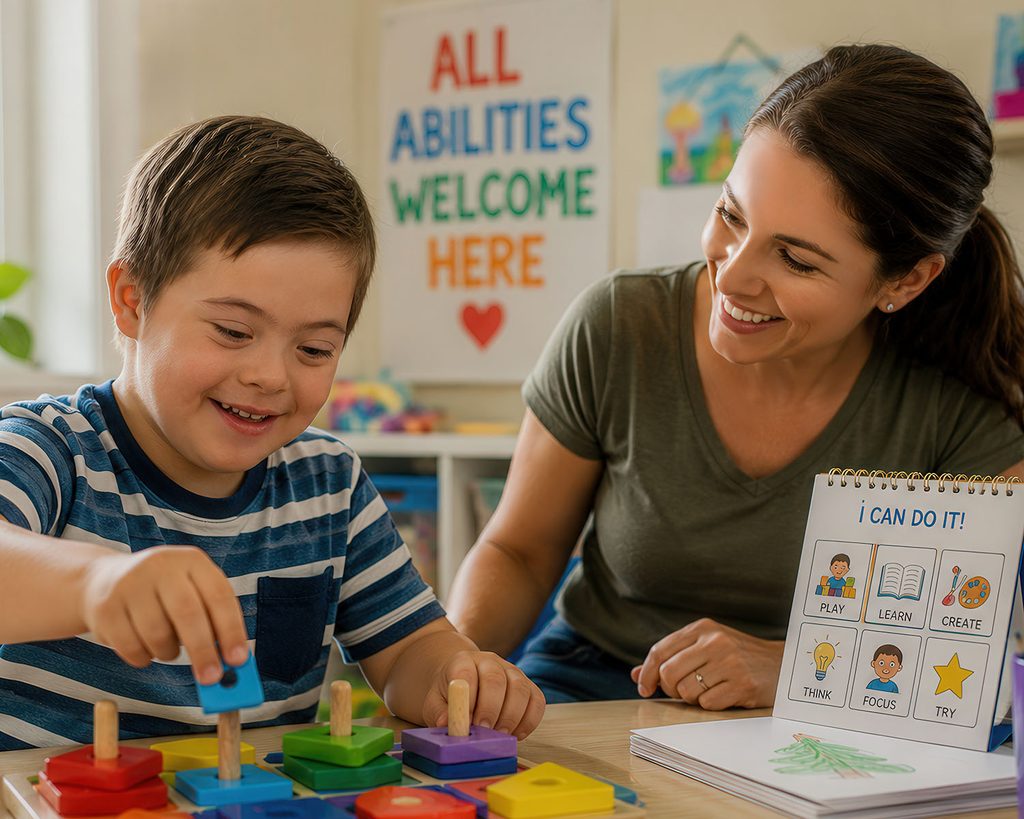
In practical terms, this might mean some students are given extra time to complete assessments. Others might be offered visual supports, scaffolded instructions, or opportunities to demonstrate their learning in different ways. Teachers may use flexible grouping, sometimes based on skill and knowledge level and other times based on interest. A student might be given a reading text with more spacing, a glossary, or audio support. Another student might be offered extension tasks that push their thinking further.

To parents, this can sometimes look like special treatment. But, really, it is about removing unnecessary obstacles so students can show what they know and what they can do. It is also about ensuring that students who need support don’t have to fail first in order to ‘qualify’ for help.
A common concern is whether this approach lowers standards. The answer is no.
Inclusive classrooms are not about lowering expectations. Curriculum requirements still apply, and learning goals remain clear. What changes is the pathway students take to reach those goals.
A child might learn the same concept through different materials, different groupings, or a different pace.
The overall objective and aim is still progress and mastery, just with fewer barriers in the way.
In fact, when teaching is responsive and flexible, all students often benefit, including high achievers. Clear instruction, strong routines, and well-designed learning tasks create better learning conditions for everyone.
Many strategies that support students with a disability or a learning difficulty also help students who are tired, stressed,
new to English, or simply having an off day.
Equity is not about giving some children an advantage. It is about ensuring differences do not become disadvantages.
This matters now more than ever. Today’s classrooms are more diverse than at any point in the past. Teachers are balancing packed curriculums, increasing wellbeing needs, and a wide range of learner profiles, all within the same room. Parents are also under pressure, and it’s easy to interpret anything potentially ‘uneven’ as unfair.
If schools insisted on rigid sameness, many students would simply fall behind. Inclusive approaches are not about being undemanding. They are about being realistic, evidence-based, and responsible. They also teach something important; in the real world, people don’t all receive the same supports, they receive the supports they need to participate.
For parents who are unsure or concerned, the most helpful step is often to have a calm conversation with the classroom teacher.
Asking about learning goals, classroom supports, and how best to help at home can provide clarity and reassurance.
Useful questions might include: “What is my child working towards right now?” “How do you support different learners in the class?” “What should I focus on at home in terms of skills, confidence, routines, or something else?” These questions keep the conversation constructive and centred on learning, not comparison.
Most teachers are thoughtful and intentional in how they support students. Adjustments are not made lightly. They are based on professional judgement and a deep understanding of the children in front of them.
Fairness in education has evolved. It no longer means treating every child the same. It means treating every child with care, dignity, and purpose.
When we shift from sameness to equity, we send a powerful message to young people: you belong here, and your learning matters.
Dr Tom Porta is an education expert with the School of Education at Adelaide University.